Are You Sure You Know Who You're Building For?
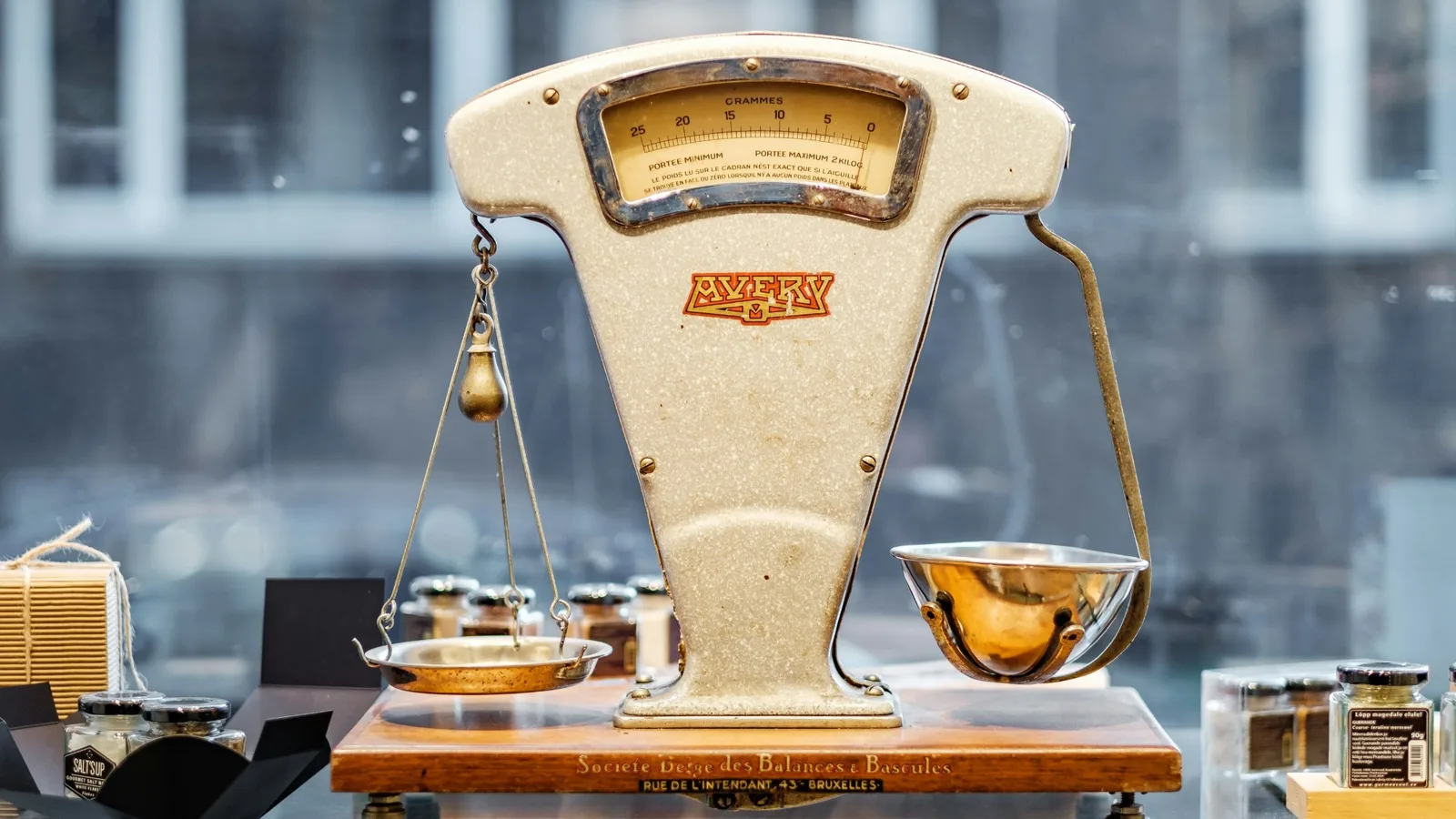
You can walk out of a product demo completely certain you understand your user, and be wrong about who that user actually is.
There's a well-known diagram in Tony Fadell's Build that maps the customer journey as a single continuous line. Awareness, education, acquisition, onboarding, use, support, loyalty, one traveller walking the whole route. The point behind it is a good one. It's easy to get so absorbed in the middle of that journey, the product itself, that everything either side of it quietly stops getting attention. Most of us who build things are guilty of exactly that. We obsess over the moment someone uses the thing and treat the rest of the journey as somebody else's problem.
What the diagram doesn't say out loud, because it's built into the shape of the thing rather than stated as a claim, is that a single line implies a single person. One traveller, start to finish. In a lot of the products I've worked on, that isn't true. The person who decides to buy something and the person who has to live inside it every day aren't always the same human being. Sometimes they're not even in the same room.
The demo you walk out of feeling good about
Here's the moment I keep coming back to. You demo the product to the partner. They're senior, they ask sharp, well-informed questions, they nod in the right places, and by the end of the call they sign off. You walk out of that room feeling like you get it, like you've just spent forty-five minutes with the user, and the user liked what they saw.
Except the partner might touch the tool twice a month. The person who actually lives in it, eight hours a day, doing the unglamorous repetitive work the product exists to support, is the associate or the trainee sitting two desks away. You've probably never spoken to them. You've built a mental model of "the user" entirely out of a conversation with someone who isn't one, not in any meaningful sense.
The uncomfortable part isn't that this happens. It's how convincing it feels while it's happening. A good demo produces real confidence, and that confidence isn't evidence. It's a feeling you get from being in a well-run meeting with an articulate person who liked your idea. None of that tells you whether the thing works for the person who has to sit with it all day. The mistake is survivable once. The risk is what happens when the same blind spot is built into the business itself rather than just a habit you can catch and correct.
How you actually balance it
I don't think there's a tidy answer here, and I'd be suspicious of anyone who handed me one. A few things I've found worth holding onto, none of them a framework.
- Go and talk to the junior person, the day-to-day user, even when they weren't in the buying conversation and have no formal say in whether you get paid. Especially then, really.
- Watch for the moment "who approved this" quietly starts standing in for "who benefits from this". They get treated as the same question constantly. They aren't.
- Be honest with yourself about which parts of the journey you've only ever seen through the buyer's eyes. That isn't a detail to assume your way past. It's a gap, and it stays a gap until you close it.
The scale of the problem is bigger than any one demo. Harvard Business Review's research found that in purchasing, the average number of stakeholders in a single purchase climbed from 5.4 to 6.8 in two years, and each of those extra people has to live with a decision made by a committee they may have had no voice in. That gap between buyer and user is widening, not closing on its own.
It's worth being honest about why this matters enough to write down. In most companies, the gap between the person who signs off and the person who lives with the result is a habit you can fix. Get in the room with the actual user often enough and the picture corrects itself. The warning I'd give any startup, especially one small enough to still believe growth solves everything, is that this doesn't hold everywhere. Sometimes the gap isn't a habit you slipped into. It's built into who the business serves on both sides, by design, and nowhere is that clearer than in a marketplace.
The version you don't grow your way out of
If you're building something with one kind of customer, this is a resourcing problem. Keep hiring, keep shipping, keep learning, and the distance between who you sold to and who actually uses it tends to narrow. You build out research, you stop mistaking the buyer's opinion for the user's experience. It costs time and headcount, but it's solvable, more or less by accident, if you're paying attention at all.
The version I've actually lived is usually one step removed from that. You're not running the marketplace yourself, you're building something that has to feed into somebody else's. A comparison site, an aggregator, a marketplace you don't control and never will. Now there are three parties in the room instead of two. Your client is paying you and has opinions about how the integration should feel. The marketplace has its own rules, its own interface conventions and its own idea of what a good listing looks like. And the marketplace's own customers, the people actually comparing and choosing, are almost certainly people you will never speak to, experiencing your client's product entirely through somebody else's screen. You end up designing for a user inferred twice over, once through your client's brief, once through a platform you don't own, with a wall between you and the person actually making the choice.
Zoom out and it's the same shape whether you're feeding a marketplace or running one. A marketplace has a side that pays and a side that uses. Sellers and buyers, hosts and guests. No amount of growth closes that gap, because the gap isn't a mistake made early on. It's the design. Those two sides were never supposed to be the same person, and the tension between them isn't a symptom of being under-resourced. It's structural, and it's permanent. Mistake it for the first kind of problem, something you'll fix once you've hired the right researchers or grown the team, and you'll spend years managing it as if it were temporary when it never was.
It's tempting to tell this as a story with a villain, the platform chasing revenue at the buyer's expense, or the sellers pushing their interests too hard at everyone else's cost. I don't think that's the honest version. Every well-run marketplace lives inside a constant, ongoing push and pull between both sides, and that tension isn't a flaw waiting to be engineered away. It's the actual job.
Lean too far toward the side that pays and you erode the trust of the side that uses the thing, and a market people don't trust eventually has no reason to exist. Lean too far the other way, protecting the buyer at every turn, and you starve the supply, the or the revenue that kept the market running in the first place. Neither side deserves to win by default. Bill Gurley's essay on evaluating digital marketplaces makes the same point from the investor's side, that a market only holds together when there's a natural, independent pull on both the buying and the supplying side rather than one propped up by the other. The job is closer to weight distribution than a decision you make once and file away, something you're constantly redistributing rather than something you fix and move on from. What balances it this quarter won't necessarily balance it next quarter, because the sides shift, the incentives shift and the market underneath them shifts too.
It's the same shape as the partner and the associate, just scaled up, sometimes stretched across a third party who was never in the room either. One version you can eventually grow your way out of. The other you manage indefinitely, on purpose, and the danger isn't the tension itself. It's not noticing which of the problems you're actually holding.
Go back to Fadell's single line for a second. It assumes one traveller, but the "customer" at the start of that line might already be more than one person, a buyer and a user, a client and the platform they're trying to reach, three parties wearing one label. Scale doesn't hand you that answer on its own. When you're small, it's something you have to go and find out on purpose, deliberately, before you've built half a product around the wrong half of it.
Seeing the shape at both scales
Toggle between the two below and watch the same divergence hold at both scales, the tension visibly shifting from stage to stage rather than settling on a single winner. What changes between them isn't the shape. It's whether you can grow your way out of it or have to manage it on purpose, indefinitely.
I don't think the question in the title resolves, and I'm not sure it's supposed to. But it's worth carrying into every demo, every roadmap review, every metric that's trending in the right direction, who is this actually working for, and who have I quietly left off the page?
More to read

Designing for the Person You Are, Not the Person You Think You Should Be
Most products are designed for idealised users who behave exactly as intended. Real users pile clothes on chairs, drop keys on tables and quit onboarding flows. The clutter is not a failure. It is the design brief.

Backlog Politics (Part II): Govern the Backlog, Don't Just Manage It
The antidote to backlog politics is not a better scoring formula, but governance. Outcome metrics, a North Star and transparent prioritisation criteria won't remove the argument. They'll just put it on record, and that changes everything about how the argument gets made.

Backlog Politics (Part I): The Backlog is a Political Artifact
The backlog is treated like a rational artefact. It isn't. It's a political artifact that reflects who has power, whose problems get solved and whose don't. The sooner PMs accept that, the sooner they can do something about it.